Ten years after the Brexit vote tore open British politics, Prime Minister Andy Burnham walked into Brussels on November 20, 2026, with a blunt message. "The Brexit we were given has not worked," he said in the run-up to the meeting. "We have lost more than we gained."
If you've been watching the UK EU summit headlines expecting a dramatic snap back into the European Union, slow down. Rejoining isn't happening overnight. What is happening in Brussels is a series of targeted fixes—food and drink trade, emissions trading, and youth mobility—designed to chip away at daily friction without blowing up domestic politics.
Honestly, the big shift isn't a single treaty. It's the tone. Burnham broke years of polite Westminster silence by putting rejoining on the table as one possible long-term option, while telling voters the immediate priority is simpler: lower supermarket bills, less red tape for exporters, and real work-and-travel chances for younger people.
Why This UK EU Summit Matters More Than Another Round of Talks
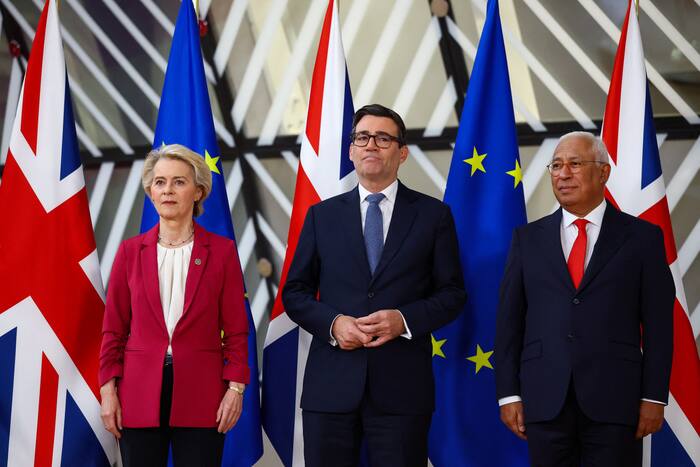
Most wire recaps treat summits like polite photo ops between European Commission President Ursula von der Leyen, European Council President Antonio Costa, and the British prime minister. That misses the underlying pressure cooker.
Britain has already spent a decade living with the trade friction of leaving the single market and customs union. Exporters deal with sanitary and phytosanitary (SPS) checks, extra paperwork, and shifting regulatory headaches. Meanwhile, Burnham has argued that Britain's wider global standing took a hit over the past ten years—not just in Brussels, but across alliances and security planning as Russian meddling and geopolitical threats keep pressing on Europe.
Still, let's be real about what a reset deal can and can't do. Burnham's team has pointed to potential economic gains around 0.4% to 0.5% of GDP—roughly £17 billion in estimates floated ahead of the talks—if these agreements stick. Sounds big on paper. Spread across an economy of Britain's size, though, half a percent is a helpful cushion, not a magic wand that erases ten years of structural trade shifts overnight.
The Deals on the Table and the Catch Nobody Should Ignore
The headline packages in Brussels center on three practical buckets:
- Food and drink trade (SPS): Cutting down friction on agrifood and farming goods so groceries and exports move with fewer border bottlenecks.
- Emissions trading: Linking or coordinating carbon markets to keep industrial and climate rules aligned rather than working at cross-purposes.
- Youth mobility: Creating a structured way for young people in the UK and the EU to live, work, or travel temporarily—reported around a 100,000 cap in provisional compromise talks.
Here's the catch that trips people up: announcing an agreement isn't the same as watching trucks roll smoothly across ports tomorrow morning. Disputes over university tuition fees for European students threatened to hold up when the sectoral deals actually enter into force. When diplomats say details are still being worked out or deferred, businesses shouldn't rewrite supply-chain contracts before implementation dates are locked in.
What People Get Wrong About Rejoining the EU
Every time a British leader talks about fixing Brexit damage, two opposite myths flare up right away.
Myth one: Burnham is secretly marching Britain straight back into full EU membership next year. Not even close. As Burnham himself has stressed, reversing Brexit is far from imminent. It would require serious political buy-in at home and unanimous agreement from a 27-nation bloc that has watched British politics whip-saw for a decade.
Myth two: Incremental tweaks are pointless unless Britain surrenders every single boundary. That's too cynical. If you run a food business or a mid-sized manufacturer, shaving off repetitive paperwork and aligning carbon rules saves real cash and real hours. At the same time, critics and EU officials alike point out that staying outside the single market means accepting real limits on market access and rule-shaping. You can't have zero border friction and total regulatory independence at the exact same time.
Security, Migration, and the Bigger European Picture
Economic headlines grab attention, yet security and migration sit right behind them. Ahead of Brussels, Burnham was already in Berlin with European partners on security—including a £260 million support package for Ukraine featuring 1,000 long-range drones—and talks around migration and third-country returns are part of the wider diplomatic mix.
For ordinary households, the link between foreign policy and kitchen-table costs isn't abstract. Energy stability, defense coordination, and predictable trade rules shape inflation and investment confidence. If London and Brussels stop treating each other like sparring partners every few months, planning gets a little easier on both sides of the Channel.
Practical Next Steps If You Follow or Do Business Across the UK and EU
Don't treat this summit as the final word, and don't tune it out either. Incremental diplomacy moves in stages, and the details after the handshakes are where the real rules live.
- Read the joint implementation timelines, not just the day-one headlines. Check official updates from the UK Government and the European External Action Service to see when agrifood, emissions, and youth mobility provisions actually take effect.
- Watch the tuition fee and regulatory consultation fine print. If you're a student, university administrator, or exporter, pay attention to unresolved sticking points like tuition fees and how UK businesses get consulted on future EU food and farming rules.
- Keep your contingency plans intact for now. Until legal texts are ratified and in force, treat current customs, labeling, and visa rules as your baseline rather than betting on instant border relief.