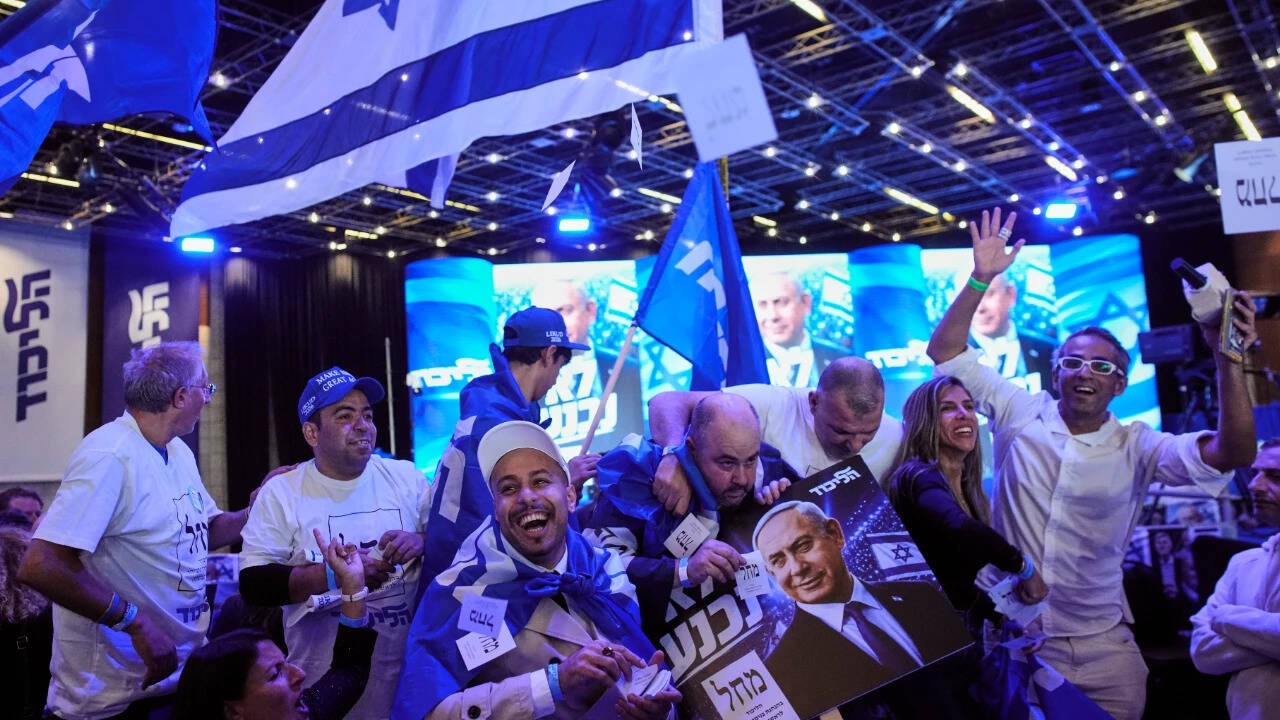
Long queues outside polling booths don't usually happen by accident. When voters flood polling stations at an unprecedented pace, it means one thing: the electorate believes the stakes couldn't possibly be higher. Israel just witnessed a seismic day at the ballot box as citizens rushed to cast their votes in the first general election since the devastating October 7, 2023 attacks. With nearly 67% of eligible voters turning out within the first nine hours alone, the message was clear. Israelis wanted to pass a definitive wartime judgment on Prime Minister Benjamin Netanyahu.
For 19 cumulative years, Netanyahu has anchored himself at the center of Israeli politics, weathering countless crises, political schisms, and international pressures. Yet, this election feels fundamentally different. The collective trauma of the country's deadliest day, coupled with prolonged conflicts stretching across Gaza, Lebanon, and direct confrontations with Iran, has left a deep scar on the national psyche. Voters aren't just choosing a political party; they're arguing over accountability, security, and the fundamental soul of the nation.
The Weight of October 7 and the Demand for Accountability
You can't talk about this election without addressing the elephant in the room: accountability. For millions of Israelis, the security failures that allowed the Hamas-led attacks to happen remain an open wound. Netanyahu has consistently resisted calls for a formal, sweeping national inquiry while in office, framing himself as the sole commander capable of steering the country through existential threats.
His chief challenger, former military chief of staff Gadi Eisenkot, built his campaign on an entirely different premise. Eisenkot and the broader opposition bloc argue that the current government's approach has failed to decisively neutralize Hamas, leaving the nation trapped in an endless cycle of conflict. When Eisenkot tells supporters that the vote marks a "new spirit" and a rectification for the past three years, he's tapping directly into a visceral fatigue felt across Israeli society.
Netanyahu, true to form, ran a classic survival campaign. He rallied his core right-wing base by warning that high turnout among left-leaning voters and Arab-Israelis threatened to unseat his coalition. Relying on his long-standing alliance with figures like Donald Trump—who publicly urged Israel to "finish the job"—Netanyahu painted himself as the indispensable shield against hostile regional powers. But this time, the sheer volume of voters suggests that his opponents were just as motivated to mobilize.
The Arithmetic of a Fragmented Parliament
Israel's political system is notoriously unforgiving to stable majorities. Power is fractured across a 120-seat Knesset, where right-wing, far-right, and ultra-Orthodox factions hold immense leverage. Netanyahu's survival has always depended on keeping this fragile coalition intact, even as it deepens Israel's isolation on the global stage.
The opposition faces an uphill battle precisely because of this mathematical fragmentation. Even if Eisenkot and his allies manage to siphon away enough votes, forming a governing coalition requires delicate compromises. Arab-Israeli voters, who make up roughly a fifth of the population, turned out in remarkable numbers. While politicians like Ahmed Tibi view this as a historic chance to alter the political landscape, mainstream Zionist opposition parties routinely rule out formal partnerships with Arab factions, creating a frustrating logjam for anyone trying to push Netanyahu out.
Furthermore, the ideological divide on Palestinian statehood remains stark. Almost no major Jewish party leader backs a traditional two-state solution anymore. Instead, the debate centers on managing the West Bank, dealing with surging settler violence, and handling international condemnation over the humanitarian toll in Gaza.
What Comes Next for Israeli Leadership
As the dust settles on record-breaking lines and frantic final appeals, the reality of Israel's political deadlock becomes stark. If neither Netanyahu nor Eisenkot manages to secure a clear path to a governing coalition, the country risks sliding back into caretaker governments and repeated elections—a script Israelis know all too well from the four inconclusive votes held between 2019 and 2021.
Netanyahu has proven time and again that writing him off is a rookie mistake. He is a master of political survival. Yet, the sheer anger, exhaustion, and determination reflected in these voter turnout numbers mean he can no longer ignore the ground shifting beneath his feet. Whether this election finally breaks his grip on power or simply extends his tenure through sheer political survival instincts, the landscape has fundamentally shifted. The judgment has been cast at the ballot box; now comes the grueling test of whether any leader can piece a fractured nation back together.